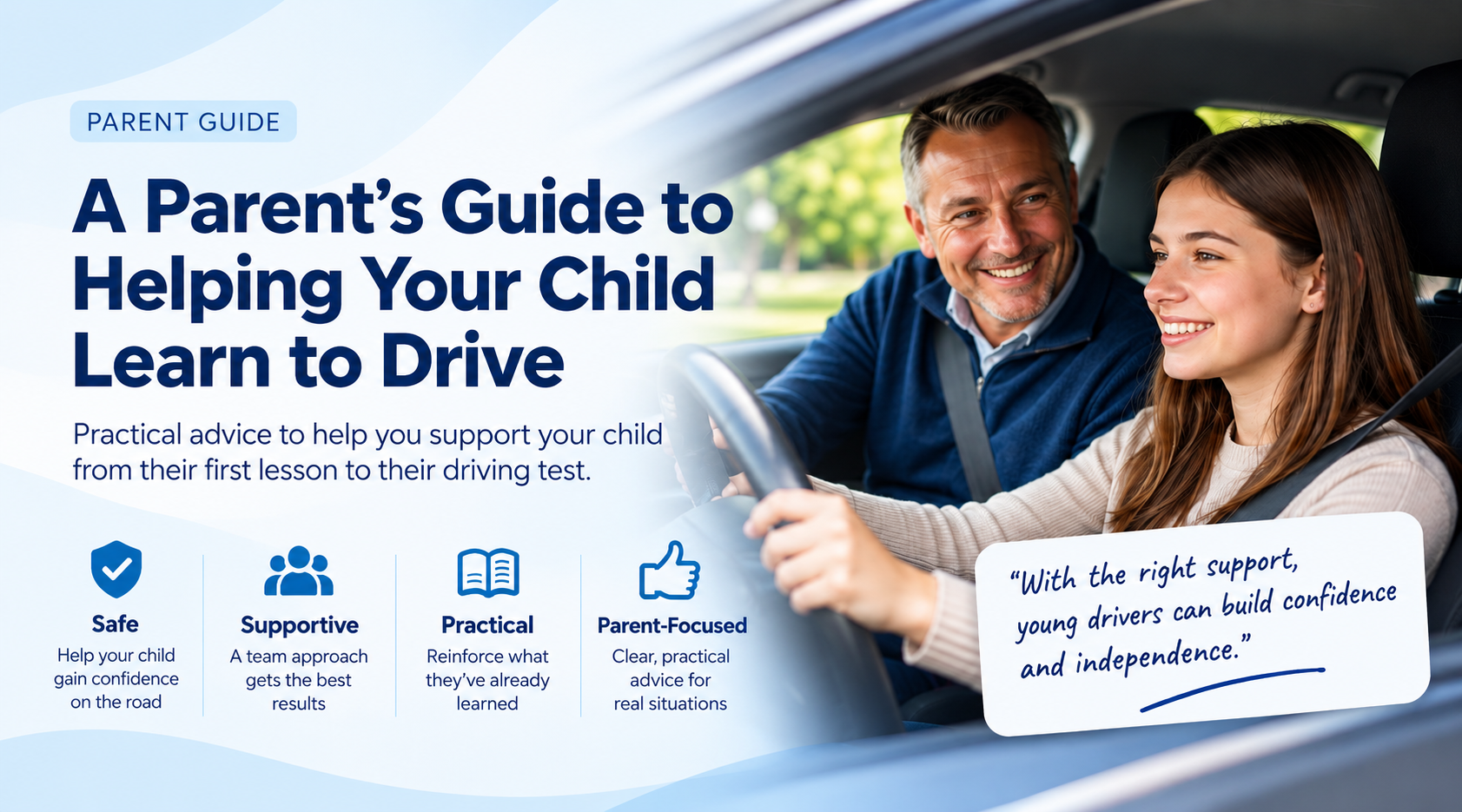
Learning to drive is a journey that parents can play an important part in. This guide offers practical advice on when to get involved, how to practise safely between lessons, and how to support your child while working alongside their driving instructor.
However, knowing how to help is just as important as being willing to help. Private practice can be extremely useful, but it works best when it supports the professional instruction your child receives rather than trying to replace it.
This guide explains how parents and supervising drivers can get involved, when private practice should begin, what to practice between professional lessons and how to create a positive learning environment.
Start With Professional Driving Lessons
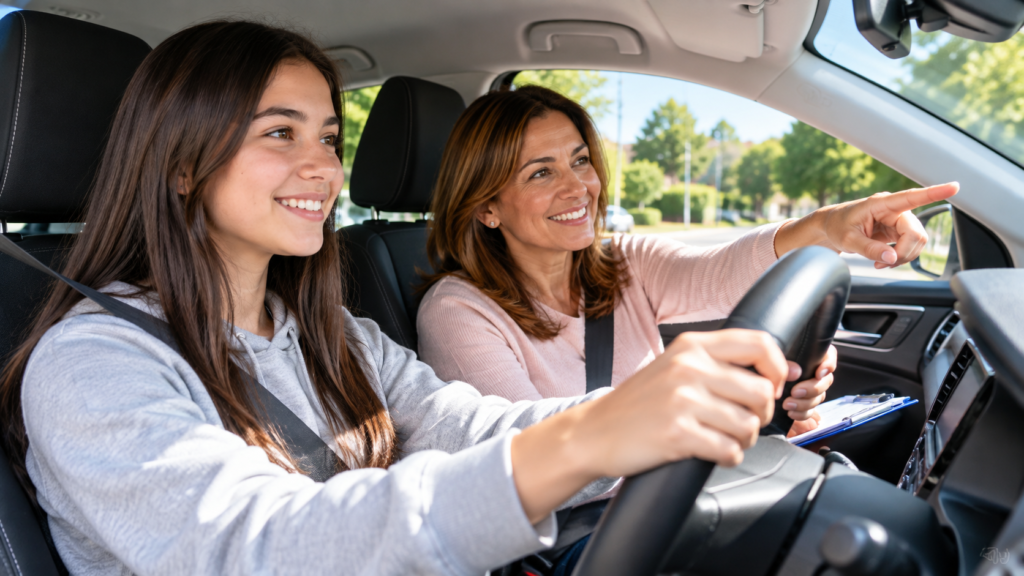
Before a learner starts regular private practice with a parent, we recommend allowing them to have their first few lessons with an Approved Driving Instructor (ADI).
The first few lessons are not necessarily the easiest part of learning to drive. In fact, they can be some of the most demanding because the learner is developing the fundamental skills that everything else will be built upon.
At the beginning, your child needs to learn how to:
- Sit correctly and comfortably in the driving position
- Carry out their cockpit drill
- Understand and operate the vehicle controls
- Move the car away safely
- Stop safely and securely
- Steer accurately
- Develop basic observation and awareness
- Begin understanding how the vehicle responds to their actions
An instructor can introduce these skills in a structured way and gradually build the learner’s confidence and ability.
Why the first few lessons matter
It can be tempting for a parent to teach their child the basic controls before they have professional lessons. After all, you may have been driving for many years and feel perfectly capable of showing them how the car works. However, the “basics” are actually the foundation of everything that follows. Driving techniques, terminology and guidance can also change over time. Something you were taught many years ago may not be the way a learner is currently being taught or assessed. That does not mean you were taught badly or that you have been driving incorrectly. Cars, roads, teaching methods and driving-test standards develop over time.The important thing is to establish consistent techniques from the beginning.
***Parent Tips***
Give the instructor the opportunity to establish your child’s basic driving techniques first. This can help prevent your child from learning one method with a parent and then having to change it when professional lessons begin.
When Should Private Practice Begin?
There is no exact number of professional lessons that applies to every learner. Everyone develops at a different pace, so the right time to begin private practice depends on the individual learner’s ability, confidence and understanding. As a general guide, after several initial professional lessons, your child should ideally have started developing the ability to:
- Move and stop the car safely
- Control the steering
- Use the basic controls correctly
- Understand basic observation and awareness
- Secure the vehicle safely
Once the instructor feels that the learner has developed enough basic control and understanding, private practice can become a very valuable addition to their professional lessons.
Why timing matters
A driving instructor’s car will normally have dual controls, allowing the instructor to intervene if necessary. A parent’s car will not normally have this additional safety feature. For this reason, parents should not feel pressured into taking their child out before they are ready. Ask the instructor when they believe private practice is appropriate.
Think of Private Practice as Reinforcement
Parents absolutely should be involved where possible. Private practice can provide a learner with valuable additional experience between professional lessons.
A useful way to think about the process is to compare learning to drive with school. The more appropriate supervised practice a learner receives, the more familiar those skills can become. The key is making sure everyone is working towards the same goal. Before going out, ask the instructor: “What would you like us to practise?”
That simple question can make a private practice session much more productive.
What Should Parents Practise?
Private practice works particularly well when it reinforces something the learner has already been taught professionally. Your child’s instructor may have recently worked on:
- Moving off and stopping
- Junctions
- Roundabouts
- Meeting traffic
- Road positioning
- Parking
- General observation and awareness
Rather than trying to introduce lots of new subjects, give your child time to repeat what they already know and become more comfortable applying those skills. Think of private practice as practice rather than another driving lesson.
- BEFORE SESSION
- What have you been learning?
- DURING SESSION
- Repeat those skills in suitable situations.
- AFTER SESSION
- What went well and what still needs work?
Don’t Try to Teach Everything at Once
Parents naturally want to help their children progress, but introducing a new subject before the instructor has covered it can sometimes create confusion. This is particularly true if the parent demonstrates or explains something differently from the instructor.
The aim isn’t to teach your child as much as possible as quickly as possible.The aim is to help them develop correct, consistent and independent driving skills.
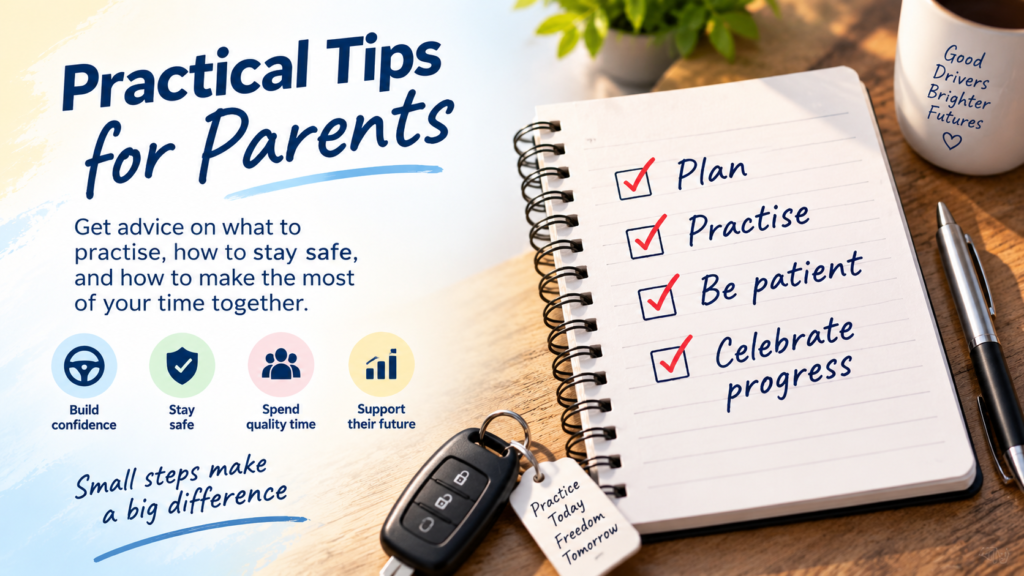
There is nothing wrong with asking:
“Are they ready for us to practise this?”
If the answer is ‘YES’, you know that the learner is ready for additional practice.
If the answer is ‘NO’, leave that particular subject for the professional lesson.
When Parents and Instructors Teach Differently
Many parents learned to drive years ago, so it is perfectly normal for some of the terminology, techniques or advice your child receives to sound different from what you remember. Driving instruction develops over time. Vehicles change, roads change and the way learners are prepared for independent driving can change too.
If your child says: “My instructor told me to do it this way.”
Try not to immediately replace that advice with your own method. You may have a perfectly valid way of doing something, but the learner needs consistency while they are developing their skills. If you’re unsure, ask the instructor.
Helping Your Child Learn From Mistakes
Mistakes are a normal part of learning to drive. A learner is simultaneously trying to control the vehicle, observe traffic, read signs, judge speed and distance, make decisions and listen to instructions. That is a lot to process. If your child repeatedly makes the same mistake, calmly discuss it when it is safe to do so and encourage them to mention it to their instructor. Sometimes the issue simply needs to be revisited professionally. Avoid correcting every little thing. Safety-related issues should, of course, be addressed. However, constantly correcting every small mistake can make a learner nervous and overwhelmed. Too much information can quickly become counterproductive.
Where possible:
- Give your child time to think
- Allow them to make decisions
- Avoid giving several instructions at once
- Discuss smaller issues after stopping somewhere safe
- Focus on the most important point rather than everything that went wrong
One of the biggest signs of progress is when the learner gradually needs less help from you.
Give Your Child Time to Think
At the beginning of learning, your child may need more guidance. You may need to help them understand when to change gear, where to position the vehicle or what they should be looking for. But as their ability develops, gradually reduce the amount of instruction you provide.
If you constantly tell your child:
- When to change gear
- When to brake
- When to move
- When to go
- Where to position the car
they can become very good at following instructions without actually developing their own decision-making skills. Ultimately, they need to drive without someone sitting beside them telling them what to do. The progression should be:
More support → less support → independent decisions
Afterwards, you can discuss what went well and what could have been done differently.
Keep Practice Calm and Positive
Learning to drive can occasionally be stressful for both the learner and the supervising driver. If either of you becomes frustrated, continuing for another hour is unlikely to achieve very much. There is nothing wrong with stopping. Find somewhere appropriate to pull over, take a break or finish the session for the day. A shorter, positive practice session is often more useful than a long session where both people become frustrated. Your relationship with your child is more important than squeezing another 20 minutes of driving into the day. If your child becomes nervous with you This is quite common. A learner may behave differently with a parent than they do with an instructor. They may feel additional pressure because they don’t want to disappoint you, damage your car or make a mistake in front of you.
Start somewhere appropriate for their current ability and keep the first few sessions manageable. As their confidence develops, gradually introduce more challenging situations, ideally following the guidance of their instructor.
Build Experience Gradually
Being able to move and stop a car does not automatically mean that a learner is ready for every type of road or traffic situation. Driving experience should develop gradually. A learner who is comfortable on quiet roads may not yet be ready for Busy roundabouts, Complex junctions, Faster roads, Heavy traffic and more complicated road layouts.
The instructor can help you understand what level your child has reached and what type of private practice is currently appropriate.
Don’t confuse vehicle control with driving ability. Controlling the car is only one part of learning to drive.
A safe driver also needs to develop:
Observation → Planning → Hazard awareness → Judgement → Decision-making → Vehicle control
These skills develop over time and through experience.
Parking Practice
Parking can be an excellent area for private practice once your child understands the basic principles and their instructor feels they are ready. Repetition can help learners become more comfortable with steering, observation, vehicle positioning, judging space and making adjustments. However, try not to become too focused on memorising one exact turning point or reference point.
This is particularly important if the parent’s car is different from the instructor’s vehicle. Different vehicles have different dimensions, steering characteristics and visibility. The real goal is for the learner to understand what the vehicle is doing, observe their surroundings and make appropriate adjustments.
Helping at Junctions and Roundabouts
As your child’s skills develop, private practice should gradually give them more responsibility. At first, they may need more help from you. Over time, however, allow them to gradually take more responsibility for planning ahead, identifying hazards, deciding when it is safe to proceed, judging speed and distance, choosing an appropriate road position and making their own decisions. Try not to tell them exactly what to do at every junction or roundabout. Your goal is to help them become a driver who can think independently.
How Long Should Private Practice Last?
There isn’t a perfect length of time that suits every learner. The quality of the practice is more important than the number of minutes spent driving. A focused session where your child practises a particular skill can be more valuable than driving around for a long time without a clear purpose. If concentration begins to drop, or either of you becomes tired or frustrated, it may be time to finish. Good Practice Is Purposeful Before setting off, know what you are trying to achieve.
For example:
“Today we’re going to practise junctions and planning ahead.”
This gives the session a purpose and helps prevent it becoming an unstructured drive.
Don’t Make Private Practice All About the Test Route
Learning the local area can certainly be useful, particularly as your child becomes more experienced. However, private practice should not be entirely about memorising possible driving-test routes. Your child needs to become capable of driving safely on roads they have never seen before.
Use private practice to give them experience of different:
- Junctions
- Traffic conditions
- Road layouts
- Roundabouts
- Road types
- Driving situations
The goal isn’t simply to learn how to pass one particular route.
The goal is to learn how to drive safely wherever the road takes them.
Driving a Different Car
It is completely normal for a learner to drive differently when they first get into a parent’s car. The clutch, brakes, steering, mirrors, seating position and general feel of the vehicle may be different from their instructor’s car. Give your child time to become familiar with the vehicle before expecting exactly the same level of control. This can actually be useful experience. Ultimately, your child needs to learn that the principles of safe driving remain the same even when the vehicle changes.
You Don’t Have to Practise Before Every Lesson
Private practice doesn’t need to happen immediately before every professional lesson. What matters more is regular and useful practice where possible. Some families may be able to practise several times between lessons. Others may only occasionally have the opportunity. Don’t worry if your circumstances don’t allow large amounts of private practice.
Professional lessons can still develop your child’s skills. Private practice is an additional opportunity to gain experience, not something parents should feel pressured into providing.
What If We Don’t Have a Suitable Car?
That’s okay.
Not every learner has access to a suitable vehicle, and not every parent feels comfortable supervising a learner. You shouldn’t feel that you have to provide private practice simply because other families do. If your child is learning entirely through professional lessons, their instructor can structure their training accordingly. The important thing is that the learner continues to receive appropriate training and experience.
Before Your First Private Practice Session
Before taking your child out, make sure both you and the learner meet the legal requirements for supervised driving and that the vehicle is legally suitable for a learner to use. It is also worth discussing the session before you start.
Decide:
- Where you’re going
- What you’re going to practise
- What type of roads are appropriate
- Roughly how long you intend to be out
Your child’s instructor may also be able to recommend suitable roads, situations or skills based on their current ability. Remember the difference between the two cars. An instructor’s vehicle will normally have dual controls. Your car will not normally have that additional safety feature.
This is another reason why private practice should always match the learner’s current ability.
What If Something Unexpected Happens?
If your child encounters a situation they haven’t experienced before, stay calm and prioritise safety. Don’t forget that you cannot simply press another brake pedal in your own car if the learner becomes confused. This is why choosing appropriate roads and situations is so important.
If something happens that shows your child needs more professional guidance, make a note of it and tell their instructor. That experience can then become something to work on during a future professional lesson.
You Don’t Need to Become a Driving Instructor
Parents sometimes feel that they need to know exactly how to teach every aspect of driving. You don’t. You’re the parent, family member or supervising driver. Your most useful role is often to provide opportunities for safe repetition and experience.
The instructor’s role is to:
- Teach new skills
- Identify weaknesses
- Introduce new subjects
- Correct techniques
- Develop the learner’s independence
- Prepare the learner for safe driving beyond the test
Your role can be to reinforce that learning between lessons.
You don’t need to turn every family journey into a formal driving lesson.
Recognising Progress
Don’t judge your child’s progress only by how many mistakes they make. Instead, look for signs that they are gradually becoming more independent.
Ask yourself:
- Are they noticing hazards earlier?
- Are they planning junctions without being reminded?
- Are they controlling the car more smoothly?
- Are they making sensible decisions themselves?
- Do they need less help than they did a few weeks ago?
One of the biggest signs of progress is when you find yourself needing to say less.
When Is My Child Ready for Their Driving Test?
Being able to physically drive the car is only part of being ready for a driving test.
A learner also needs to demonstrate:
- Good judgement
- Awareness
- Planning
- Appropriate decision-making
- Safe responses to different situations
- The ability to drive without relying on someone else to guide them
Parents naturally want to support their child, but try not to put pressure on the learner or instructor to book a test simply because they have been learning for a certain amount of time. Everyone progresses differently. Instead, ask the instructor what areas still need developing, and what can we practise privately to help?
That gives you something useful to work towards.
Can Private Practice Reduce the Cost of Learning?
Used correctly, private practice has the potential to make professional lessons more productive. The purpose isn’t necessarily to replace professional tuition. Instead, it gives the learner additional opportunities to repeat and strengthen skills they have already been taught.
For example, an instructor may introduce a particular skill during a professional lesson. If the learner then safely practises that skill several times with a parent, the instructor may be able to spend less time repeating the same basic exercise during the next lesson.
That is where private practice can be particularly valuable. The Most Important Thing is to support, Don’t Pressure the student. Every learner is different. Some learners pick certain skills up very quickly and struggle with others. Another learner may have completely different strengths and weaknesses.
Try not to compare your child with:
- Their friends
- Their siblings
- Other learners
- How quickly you remember learning yourself
Give them time to develop. Learning to drive isn’t a race.
The objective is not simply to get a driving licence as quickly as possible. It is to develop the knowledge, judgement, awareness and experience needed to become a safe and confident driver.
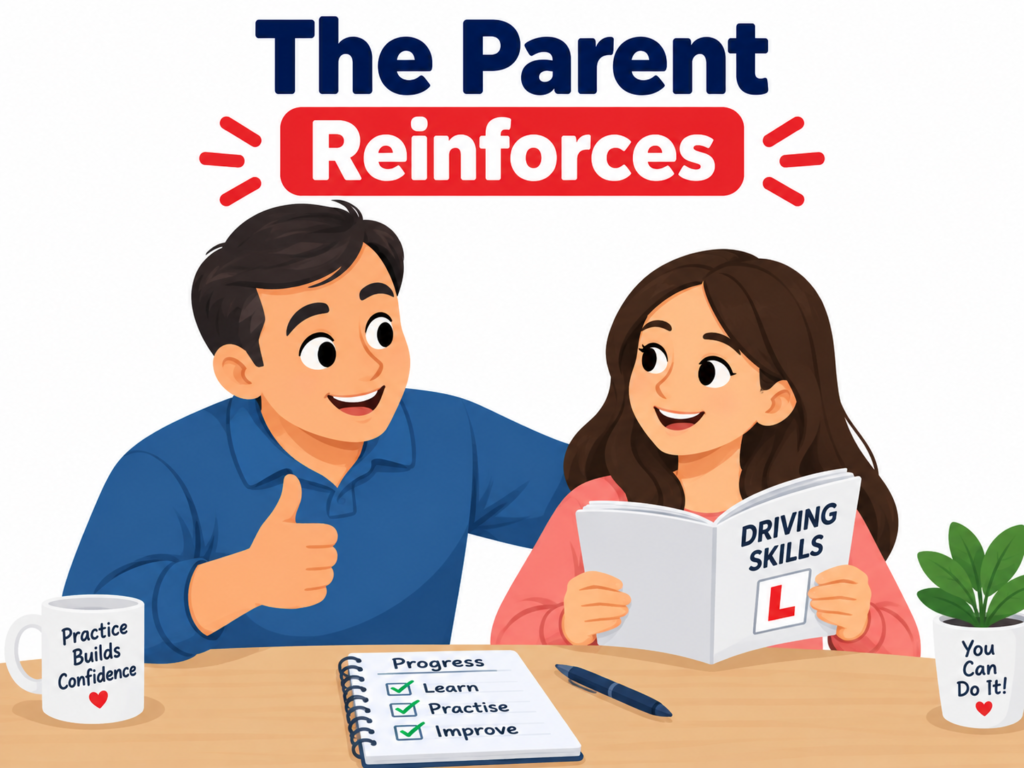
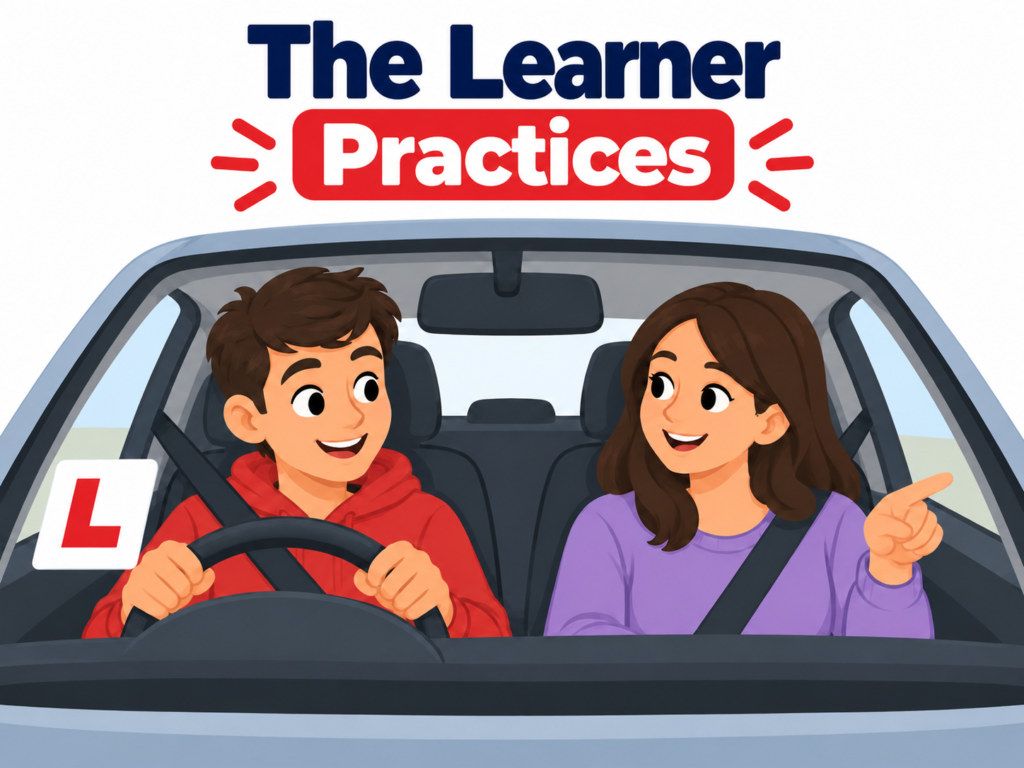
The Instructor + Parent + Learner Approach
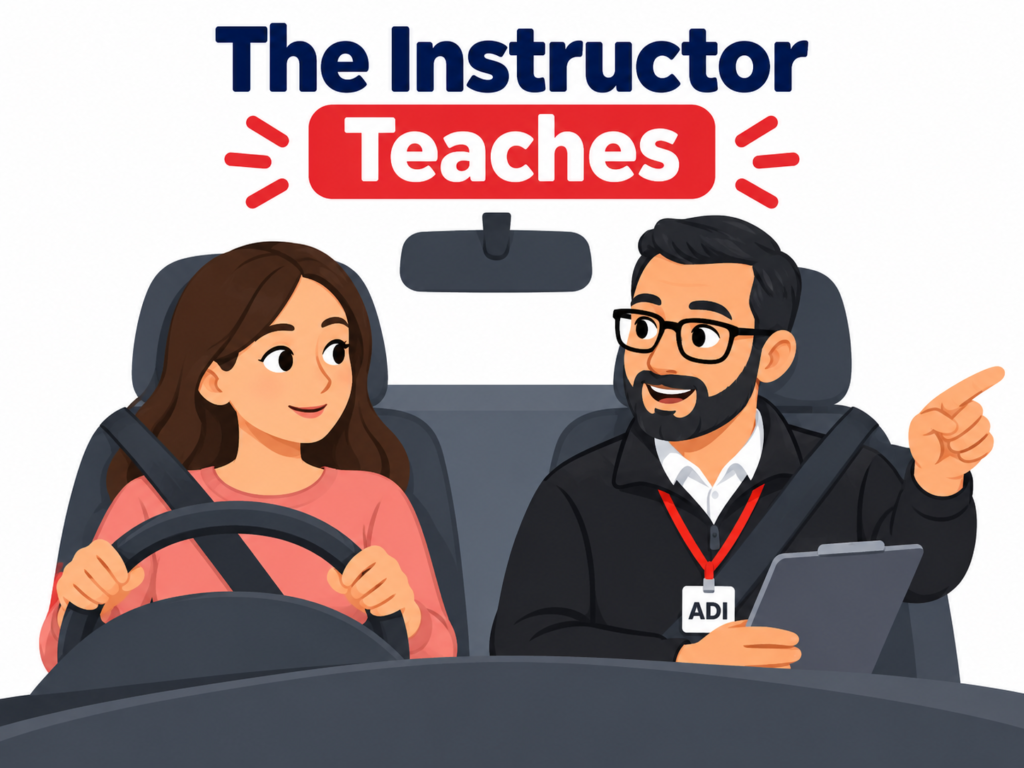
The Instructor Teaches
They introduce new skills, explain techniques, identify weaknesses and guide the learner towards independent driving.
The Parent Reinforces
They provide opportunities for safe repetition and additional experience between professional lessons.
The Learner Practices
They develop their skills, build confidence and gradually become more independent with their driving.
This creates a continuous learning cycle:
Professional lesson → Private practice → More experience → Feedback → Professional lesson
The learner brings their experiences back to the instructor, who can identify what has improved and what needs more work. Then the process repeats.
The best results can come when everyone works together.
Key Points for Parents
Learning to drive takes time, practice and patience. Your support can make a real difference, particularly when private practice is used to reinforce what your child has already learned professionally.
Give the basics time to develop and allow your child to build their initial skills with an Approved Driving Instructor before starting regular private practice. Practise what has been taught and ask the instructor what your child should be practising and use your time together to reinforce those skills. Keep your advice consistent and if you’re unsure about something, check with the instructor rather than giving advice that may conflict with what your child has been taught.
Don’t rush their progress because every learner develops at a different pace. Being able to control a car does not necessarily mean they are ready for every road or traffic situation. Stay calm and patient, mistakes are part of learning. Correct safety-critical issues calmly and avoid overwhelming your child with too many instructions. Let them think for themselves and as their skills improve, gradually reduce the amount of help you give so they can develop the judgement and decision-making skills needed for independent driving.
Use private practice as additional learning, it doesn’t have to become another driving lesson. Your role is to provide safe opportunities for repetition and experience and keep communicating with the instructor, the more the instructor and parent understand what each other is working on, the more useful the learner’s practice can become.
A Simple Question That Can Make a Big Difference
If you’re ever unsure what your child should be practising between lessons, you don’t need to guess. Simply ask their instructor: “What would you like us to practice before the next lesson?”
A quick conversation can help you understand:
- What your child is currently learning
- What they are ready to practise privately
- What they still need help with
- What should be left for the next professional lesson
This can make private practice safer, more productive and much less stressful for everyone involved.
Need Professional Guidance?
If your child is learning to drive and you’re unsure about when to start private practice or what they should be practicing, speak to their driving instructor. At Pro Drivers Academy, we encourage parents and supervising drivers to be part of their child’s learning journey.
Private practice can be a valuable addition to professional driving lessons when it is carried out safely and consistently.If you’re unsure what to practise, simply speak to your instructor.
Working together can help your child build the skills, confidence and experience they need — not only to pass their driving test, but to become a safe and independent driver for life.