Take the stress out of test day with our full walkthrough of what really happens — from the warm-up drive to the examiner’s briefing, the driving part, and getting your results.
Driving Test Day: What To Expect And How To Prepare
A complete walkthrough of what happens before, during, and after your driving test
Your driving test day can feel like the most nerve-wracking moment of your learning journey — but knowing exactly what to expect can help you stay calm, confident, and focused.
In this guide, we’ll walk you through the entire process step by step — from your pre-test warm-up right through to getting your results.
The Hour Before Your Test: Warm-Up Drive
Your instructor will usually pick you up about an hour before your test.
This isn’t a full lesson — it’s a short warm-up drive designed to help you settle in and get your mind focused.
During this time you’ll:
- Adjust your seat, mirrors, and steering to make sure you’re comfortable.
- Go over basic controls and mirror-signal routines.
- Practise a few manoeuvres or tricky junctions near the test centre.
- Get into the right driving mindset and calm any nerves.
You’ll aim to arrive at the test centre around 15 minutes early, giving you enough time to park, go inside, and relax before it begins.
Arriving at the Test Centre
Once inside, you’ll go to the waiting room. Take a moment to breathe, relax, and prepare mentally.
When the examiner comes out, they’ll:
- Call your name and greet you.
- Ask to see your photocard driving licence (this must be the original).
- Ask you to sign a declaration confirming that your car is insured and roadworthy.
- Check that your details are correct.
They’ll also ask:
- Whether you’d like your instructor to sit in the back during your test.
- Whether you’d like your results shared with your instructor afterwards.
Both are entirely up to you.
Before heading out, the examiner may also ask what you prefer to be called — for example, if you go by a nickname.
The Vision Check (Eye Test)
As soon as you step outside, the first thing you’ll do is the eye test.
You’ll need to read a number plate from 20 metres away.
If you can’t do this, the test will end before you even start — so make sure your glasses or contact lenses are with you if you need them!
Vehicle Safety Check
Next, the examiner will ask you to take them to your car.
They’ll:
- Check your number plate, registration, and basic vehicle condition.
- Walk around the car to ensure it’s safe and roadworthy.
Then, before setting off, they’ll ask you one of the “Tell Me” questions — for example:
“Tell me how you’d check your brakes are working before a journey.”
This happens before you start driving. The “Show Me” question (where you physically show something, like operating the horn or wipers) happens while you’re driving later on.
The Driving Part of the Test
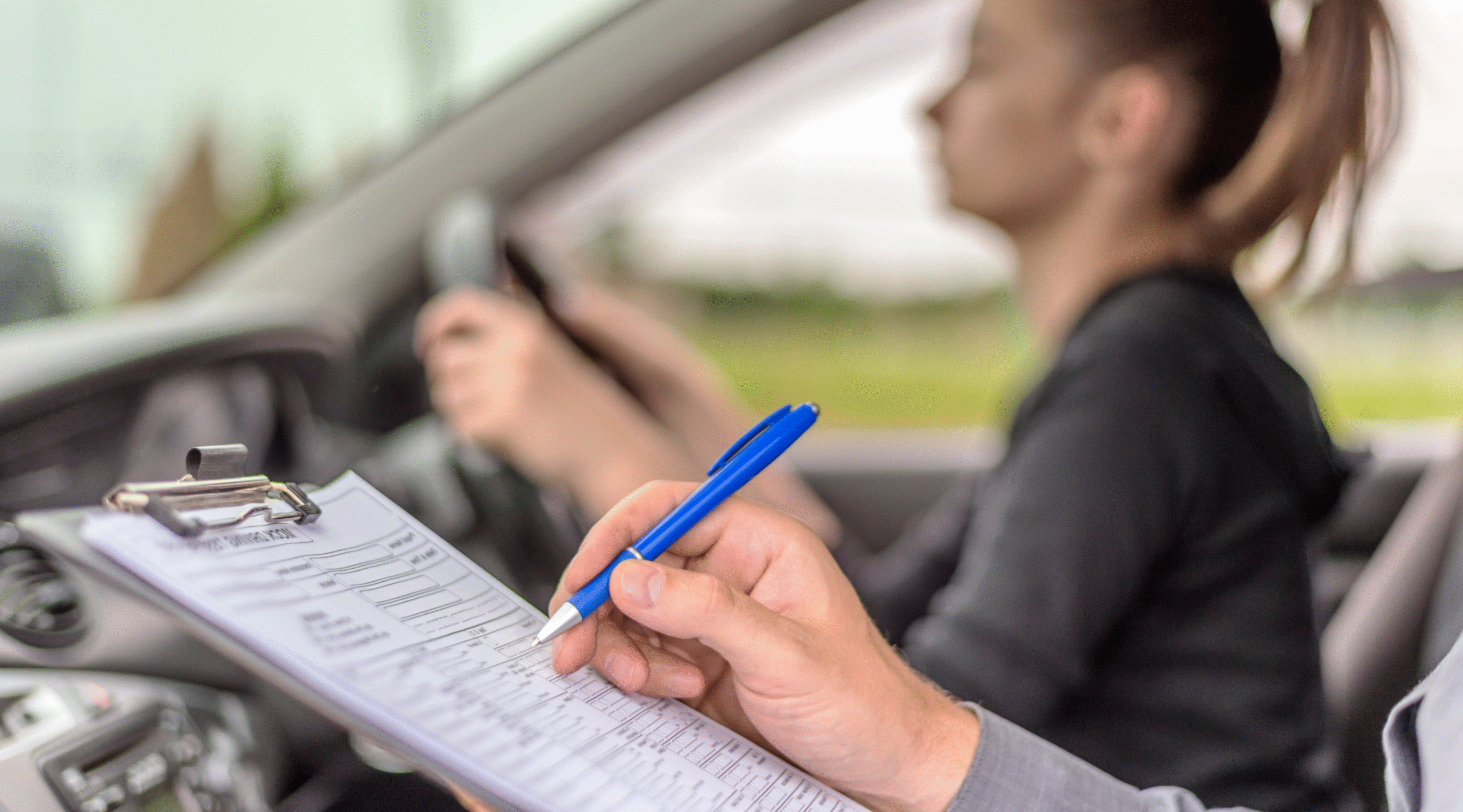
Once everyone’s ready, the examiner will get in and explain how the test will work.
They’ll usually say something like:
“I’d like you to follow the road ahead at all times unless signs or road markings tell you otherwise. If I want you to turn left or right, I’ll tell you in plenty of time.”
From there, your practical test drive begins.
You can expect:
- Around 35–40 minutes of driving in total.
- A mix of different roads — town, dual carriageways, country lanes, roundabouts, and junctions.
- Independent driving for about 20 minutes, either following road signs or a sat-nav provided by the examiner.
During the drive, you’ll also be asked to perform:
- One reversing manoeuvre, chosen from:
- Parallel park
- Bay park (forwards or reverse)
- Pull up on the right and reverse two car lengths
- Possibly an emergency stop (not always included)
At some point, you’ll also get your “Show Me” question, such as:
“When it’s safe to do so, can you show me how you’d demist the front windscreen?”
Returning to the Test Centre
When the test finishes, the examiner will ask you to park safely back at the test centre.
They’ll let you switch off the engine and relax while they complete their notes.
You’ll then receive your test result, either privately or with your instructor present — whichever you chose earlier.
The Results: Pass or Fail
If you pass, congratulations!
You’ll receive your pass certificate and your full driving licence will arrive in the post.
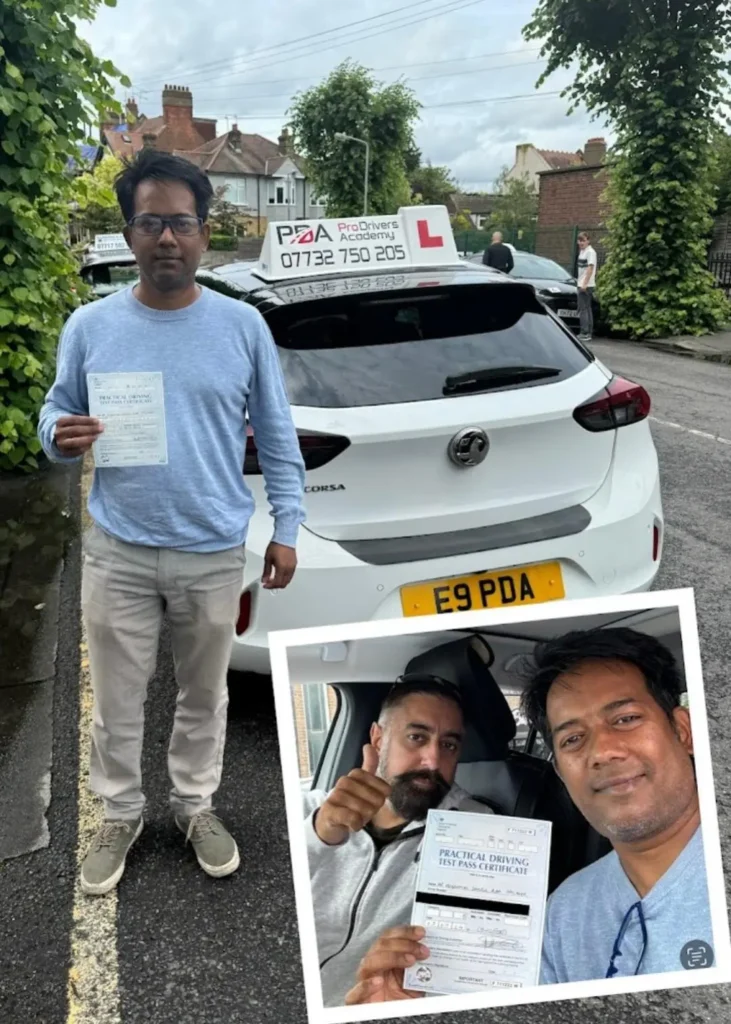
We’re proud to support our students through every stage of their learning journey. Each pass represents confidence built, skills developed, and careful preparation with our experienced instructors at Pro Drivers Academy.
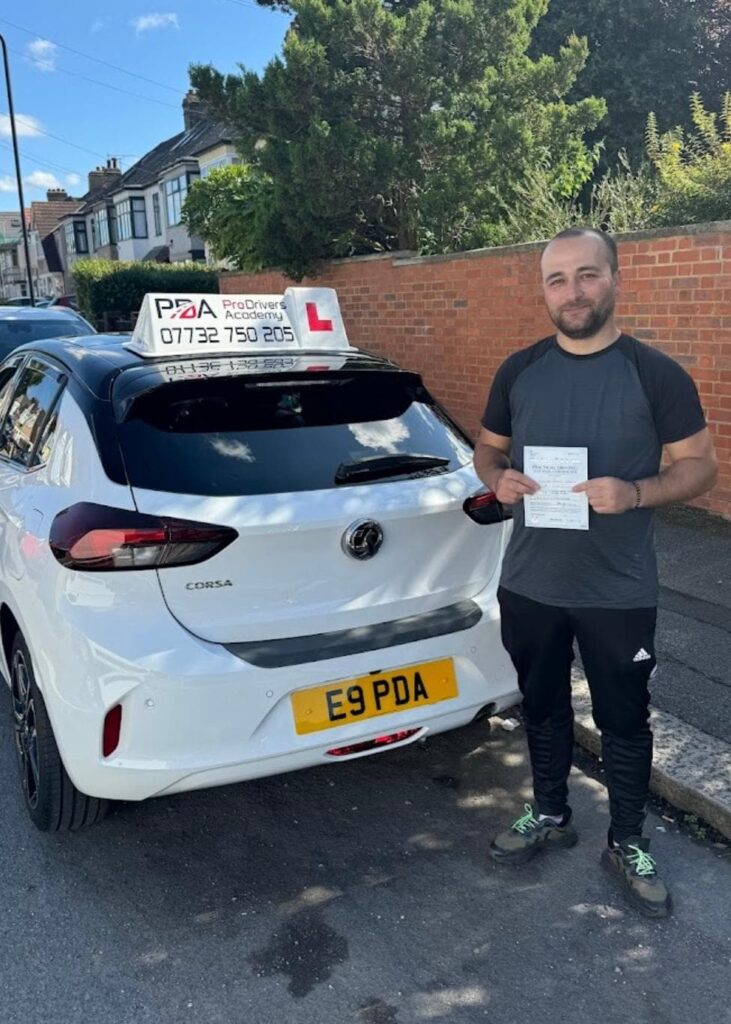
If you don’t pass this time, don’t be disheartened — the examiner will explain where you went wrong, and your instructor can help you work on those areas before your next attempt. Every test is valuable experience.
Preparing for Your Driving Test?
These guides will help you understand the test centre, learn about local test routes and know exactly what to expect on the day of your practical driving test.
Loughton Driving Test Routes, Tips and Common Mistakes
What Happens on Your Driving Test at Loughton
Tips for a Calm, Successful Test Day
- Sleep well the night before — being rested is crucial.
- Eat something light before you go.
- Bring your licence, glasses (if needed), and your confidence.
- Treat the examiner like a passenger you’re keeping safe — that’s the mindset they want to see.
- Stay positive — small mistakes don’t automatically mean you’ve failed.
Final Thoughts
Your driving test is simply a chance to show the examiner what you already know.
By preparing well, staying calm, and knowing what to expect, you can walk in with confidence.
Good luck — and remember, this is just the beginning of your driving journey!